

Tubal Ligation & Reversal
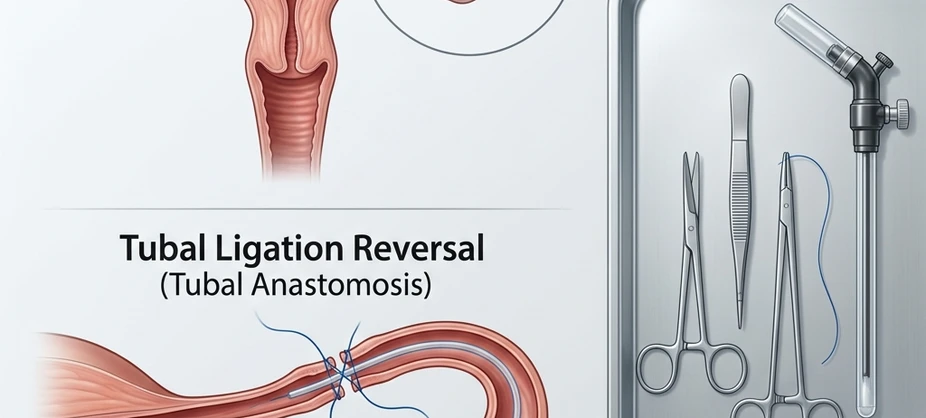
What is Tubal Ligation & Microsurgical Reversal?
Tubal Ligation (Tubectomy) is a safe, permanent contraception method chosen by women who have completed their childbearing years. In contrast, Tubal Ligation Reversal (Microsurgical Tubal Re-anastomosis) is an intricate reconstructive surgical procedure designed to unblock and re-align previously tied or clipped fallopian tubes, reopening the natural biological pathway to spontaneous conception.
At June Women's Health in Sushant Golf City, Lucknow, led by Dr. Shamim Sultana Yashine (MS - Obstetrician & Gynaecologist, Laparoscopic Surgeon), we provide compassionate, evidence-based reproductive surgery. Whether you are seeking a minimally invasive laparoscopic tubal ligation or exploring whether you are a suitable candidate for fallopian tube recanalization, Dr. Shamim Sultana Yashine provides candid clinical assessments.
Serving families from Sushant Golf City, Raebareli Road, Sultanpur Road, Alambagh, Awadh Vihar Yojna, and greater Lucknow, our private single-doctor clinic near Lulu Mall on Shaheed Path ensures total confidentiality, unhurried evaluations, and state-of-the-art microsurgical hospital care.
Tubal Ligation vs. Tubal Reversal Comparison
While ligation is a quick, straightforward procedure to permanently block the tubes, reversal is a highly complex microsurgery designed to meticulously put them back together.
Tubal Ligation (Tubectomy)
Permanent Sterilization. Contraception.
Provide highly reliable, permanent sterilization to prevent future pregnancy.
Quick surgical execution, typically taking 20 to 30 minutes to complete.
Fallopian tubes are cut, tied, sealed using heat (electrocautery), or clipped.
Offered as a daycare procedure; patients return home the same day.
Boasts over 99% efficacy in preventing pregnancy; highly secure contraception.
Tubal Ligation Reversal
Fertility Reconstruction. Re-anastomosis.
Reconstruct the fallopian tubes to restore natural fertility pathways.
Delicate microsurgery requiring 2 to 3 hours of precise micro-suturing.
Removing blocked scar segments and joining healthy ends using microscopic sutures.
Typically requires a 1 to 2 night inpatient admission for observation.
Success averages 40% to 80% depending on age, tube length, and sterilization type.
Key Factors Influencing Reversal Success
Not everyone is a candidate for tubal reversal. Dr. Shamim Sultana Yashine conducts a rigorous clinical evaluation of these primary success indicators to give you a realistic success probability.
Sterilization Technique Used
Tubes occluded with mechanical Hulka clips or Falope rings have minimal tissue destruction and yield the highest re-canalization success compared to extensive bipolar electrocautery.
Healthy Tubal Length (>4cm)
Successful natural conception requires at least 4 to 5 cm of functional, vascularized fallopian tube with an intact fimbrial end to capture ovulated eggs from the ovary.
Ovarian Reserve & Maternal Age
Evaluating serum Anti-Müllerian Hormone (AMH) and antral follicle counts to confirm robust ovulatory reserve, with optimal reversal outcomes achieved in women under 38.
Paternal Semen Parameters
Conducting an updated semen analysis for the partner to ensure adequate sperm count and progressive motility before proceeding with surgical reconstruction.
Our Pre-Surgery Preparation & Safe Guidelines
Reconstructing fallopian pathways requires surgical precision and pre-operative preparation. Let us review the primary guidelines.

Operative Record & HSG Audit
Reviewing previous surgical discharge summaries and performing hysterosalpingography (HSG dye test) to measure proximal tubal stumps and cavity contour.
Pre-Anesthesia Fitness Clearance
Microsurgical tubal re-anastomosis is performed under general anesthesia. Pre-op blood counts, coagulation screens, ECG, and chest radiography ensure total safety.
Convalescence & Rest Protocol
Planning for 7 to 10 days of home rest, keeping the mini-laparotomy bikini incision clean and dry, and avoiding strenuous core exercise or heavy lifting for 3 weeks.
The Reversal Microsurgery Journey
Microsurgical tubal re-anastomosis is an incredibly delicate reconstructive surgery. Let us walk through our precise clinical journey map.
Every treatment and procedure at our clinic is performed with the highest standards of safety, compassion, and expertise. Dr. Shamim Sultana Yashine ensures each step of your journey is carefully monitored and optimized for the best possible outcomes.
Expert Guidance
From your initial consultation through recovery, our dedicated team is here to support you with personalized care, ensuring your comfort and peace of mind at every stage.
Step 1: Comprehensive Reversal Feasibility Assessment
Dr. Shamim Sultana Yashine reviews past sterilization documents, performs pelvic sonography, tests maternal AMH, and verifies partner semen health.
Step 2: General Anesthesia & Mini-Laparotomy Access
Under general anesthesia, a discreet 4cm to 5cm cosmetic transverse mini-laparotomy incision is placed low along the pubic hairline.
Step 3: High-Magnification Microsurgical Re-Anastomosis
Under microscopic magnification, scarred tubal ends are excised, the inner lumens are re-approximated, and delicate 8-0/9-0 sutures restore tubal continuity.
Step 4: Intraoperative Chromopertubation & Closure
Dilute methylene blue dye is injected transcervically to visually verify bilateral tubal patency and watertight lumen repair before cosmetic sub-cuticular closure.
Why Women Choose June Women's Health for Tubal Surgery
Google Rating
Based on 11 Reviews
- Microsurgical Reconstructive PrecisionAdvanced surgical expertise in high-magnification fallopian re-anastomosis using ultra-fine micro-sutures to restore natural lumen patency.
- Honest Fertility Feasibility AuditsDr. Shamim Sultana Yashine conducts rigorous pre-op HSG and ovarian reserve checks, advising reversal only when natural pregnancy odds are realistically high.
- Private Surgical Planning in Sushant Golf CityAll consultations are held strictly by prior appointment in our calm, sterilized clinic, with procedures scheduled in premier tertiary hospital theatres.
Google Rating
Based on 11 Reviews
Frequently Asked Questions
Tubal ligation (female sterilization or tubectomy) is a permanent birth control procedure where the fallopian tubes are clipped, tied, or sealed to prevent sperm from meeting the egg. Tubal ligation reversal (microsurgical tubal re-anastomosis) is a delicate reconstructive microsurgery that removes scar tissue, unblocks the remaining tube segments, and reconnects them to restore natural fertility.
Pregnancy success rates after microsurgical tubal reversal typically range between 50% and 75%. The highest success is seen in women under 35 with at least 4cm of remaining healthy tubal length and healthy partner semen parameters. Many couples successfully conceive naturally within 6 to 12 months following surgery.
We maintain 100% upfront financial clarity. A laparoscopic daycare tubal ligation ranges from ₹22,000 to ₹38,000. An advanced microsurgical tubal reversal (which requires specialized micro-instruments, high-magnification optics, general anesthesia, and hospital daycare stay) typically ranges from ₹65,000 to ₹1,15,000.
Both are viable options. Tubal reversal is often preferred for women under 37 with good ovarian reserve who wish to conceive naturally multiple times without repetitive medical cycles. IVF is recommended if the remaining fallopian tube length is under 3cm, if there is severe male subfertility, or if maternal age is above 38 with diminished ovarian reserve.
Following a laparoscopic tubectomy, patients walk home the same day and resume light work within 3 to 5 days. For microsurgical reversal via mini-laparotomy, hospital stay is usually 24 hours, with light desk work resuming after 7 to 10 days and full physical activity after 3 to 4 weeks.
Consultations at our Sushant Golf City clinic operate strictly by prior appointment during dedicated morning and evening hours. Dr. Shamim Sultana Yashine reviews your previous sterilization discharge summary, performs baseline fertility testing, and discusses all natural conception and IVF options transparently.